Our history
From Prairie and Woodland to Community
Long before Countryside Lake was formed, this area was a natural landscape of oak savannas, open prairie, and low-lying wetlands. In the early 1800s, the land that now forms the lake was a swampy slough threaded by a small stream and surrounded by rolling wooded terrain.
The Potawatomi people were the region’s earliest known inhabitants, using the area for hunting, fishing, and trade. Evidence of their presence remains in the form of “Indian marker trees”—young trees once bent and trained to grow in specific directions to mark trails and important locations.
Following the 1833 Treaty of Chicago, which forced the relocation of Native American tribes, settlers of European descent began arriving in the area. By the mid-1800s, families such as Price, Earle, Aynsley, Ames, and Cook established farms across what is now Countryside Lake. The land was valued for its fertile soil and open prairie, and early homesteads formed the foundation of the community’s footprint.
A Rural Landscape Takes Shape
Throughout the late 19th century, the area remained largely agricultural. Farming was the primary way of life, supported by nearby rail access that connected local producers to broader markets. Small settlements developed nearby, and the land that would eventually become Countryside Lake remained quiet, rural, and sparsely populated.
In the early 1900s, however, a shift began. As Chicago grew, city residents increasingly sought nearby destinations for recreation and escape. The scenic beauty of the region—its wooded hills, open spaces, and natural wetlands—began attracting attention as a potential retreat from urban life.
The Vision of Samuel Insull
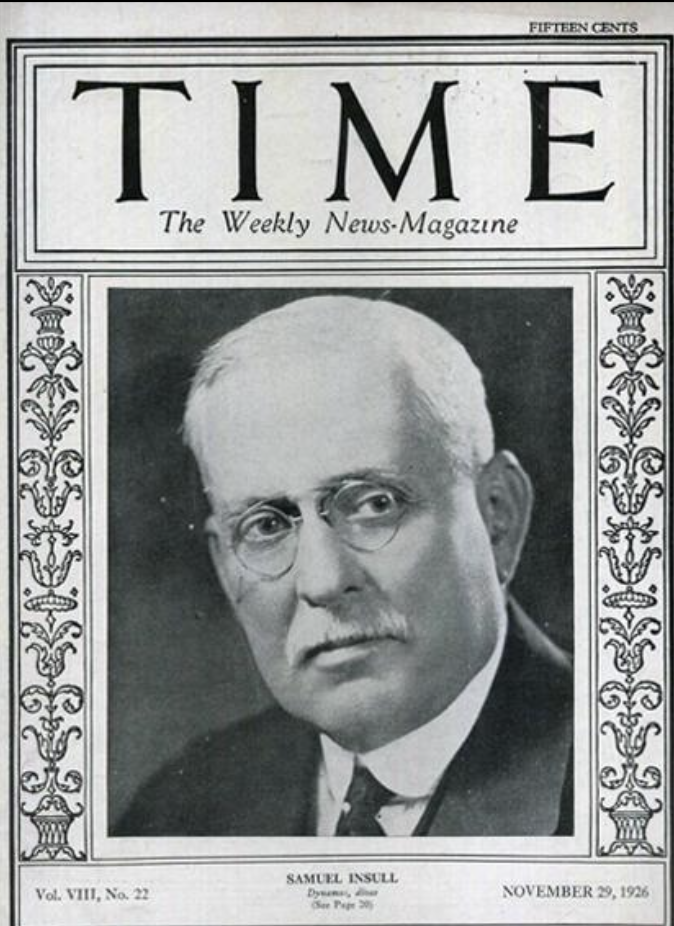
Countryside Lake owes its creation to Samuel Insull, one of the most influential industrialists of the early 20th century. After building a vast electric utility empire in Chicago, Insull turned his attention to developing a country estate and recreational community in Lake County.
In 1926, Insull and his associates formally established the Countryside Lake Association. Their plan included transforming the natural slough into a man-made lake by constructing a dam, creating a centerpiece for a new residential and recreational community.
The original development vision was ambitious:
A 140-acre lake
A golf course (the first public course in Lake County)
Large country home sites
Recreational amenities centered around nature and outdoor living
Insull himself built a hunting lodge on what is now the association’s beach island—one of the earliest homes in the community.
Growth, Change, and Resilience
The stock market crash of 1929 and the Great Depression brought Insull’s broader business empire to an abrupt end, slowing development in the area. For decades, Countryside Lake remained a relatively quiet and lightly populated community, with large tracts of land gradually changing ownership and being subdivided over time.
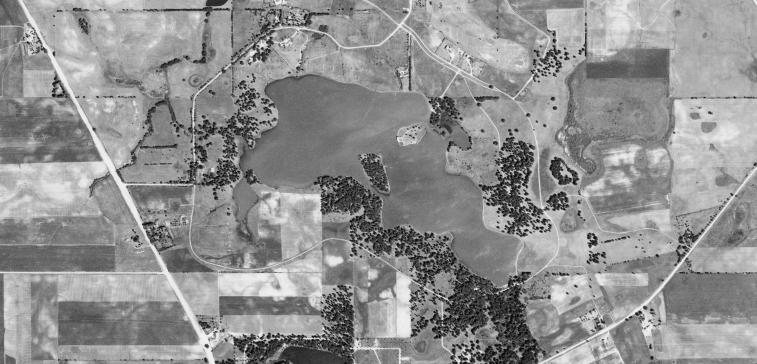
Countryside Lake - 1939
During the mid-20th century, the area retained much of its rural character. Residents enjoyed open land, wildlife, and a slower pace of life, even as suburban development gradually expanded outward from Chicago. In 1969 total CLA membership remained relatively small at about 65 members. Through the 1970s additional homes were built, and by 1979 CLA membership grew to more than 90 members. During the 1980s residential development in Lake County and Fremont Township increased substantially. Membership in Countryside Lake Association also began to grow at a faster pace. Development pressures led to the formation of the Countryside Homeowners Association (CHA), which assumed responsibility for managing infrastructure, drainage, and community assets. Over the years, some planned neighborhood developments and individual associations were created within CLA boundaries.
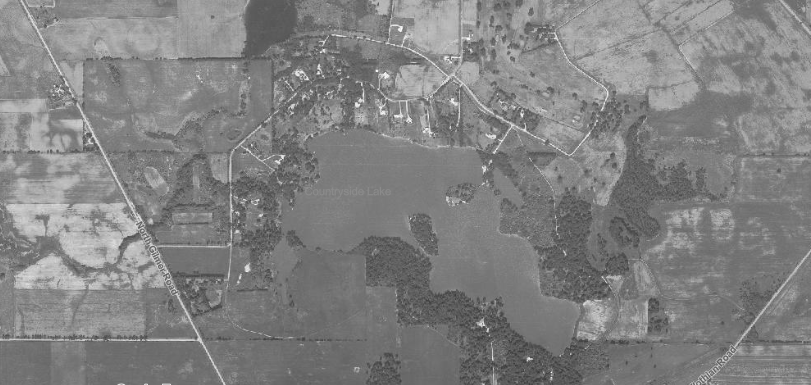
Countryside Lake - 1980
Countryside Lake Today
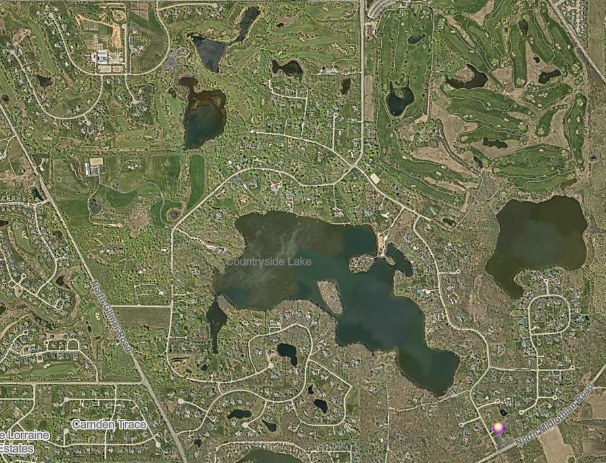
Today, Countryside Lake reflects both its natural origins and its carefully guided development. The lake itself—created from a once-swampy slough—remains the defining feature of the community, surrounded by heavily wooded 40,000+ square foot properties, abundant wildlife, and a strong sense of place.
While much has changed over the past century, the original vision endures: a community built around nature, recreation, and a shared appreciation for the land.
A Legacy That Endures
From Native American hunting grounds to farmland… from a visionary 1920s development to a thriving modern community—Countryside Lake’s history is one of transformation, resilience, and continuity.
It is a place shaped by both nature and intention—and preserved by the generations who call it home.